Tuesday, October 10, 2023

Thinking Activity: Cultural Studies

Hello readers, I am writing this blog as a thinking activity given by Dr. Dilip Barad sir, Head of the Department of English, MKBU, on cultural studies. In this blog, I will discuss three things:

-What is power?

-Why is it important to study the media in our digital culture?

-Who can be considered a 'Truly Educated Person'?

1. Power in Cultural Studies:

Cultural studies is a broad field of study that examines the relationship between culture and power. It looks at how culture is shaped by power, and how power is used to maintain the status quo or to create change.

One way to understand power in cultural studies is to think about the different sources of power. These include physical force, wealth, state action, social norms, ideas, and numbers. Power is never static, and it is constantly shifting and changing.

Media plays a powerful role in shaping our culture and our understanding of the world. It can be used to promote certain ideas and values, while silencing others. In our digital culture, the media is more powerful than ever before. We are constantly bombarded with messages from social media, streaming services, and other online platforms. It is important to be critical consumers of media and to be aware of the biases that may be present.

Education is another key area where power is at play. The education system is a tool for socialising young people into the dominant culture. It can also be a tool for challenging the status quo and empowering students to think critically.

A truly educated person is someone who is aware of the different sources of power and how they are used. They are also someone who is critical of the media and the education system. They are able to think for themselves and to challenge the dominant culture.

Power is a complex topic, but it is one that is essential to understand in order to create a more just and equitable world. By studying cultural studies, media studies, and education, we can gain a better understanding of how power works and how we can use it to make positive change.

How to read and write power:

Reading power is about seeing the world more clearly and understanding why things are the way they are. It is about identifying the different sources of power, how they are used, and who benefits from them. You can read power by looking at the institutions that shape our lives, the relationships between people, and the ways in which people are marginalised and oppressed.

Writing power is about using your voice to challenge the status quo and advocate for change. It is about raising awareness about injustice and inspiring people to take action. You can write power in many different ways, such as essays, articles, poems, stories, songs, letters, social media content, or blogs. The most important thing is to be authentic and write from the heart about what you are passionate about and what you believe in.

Importance of Media Studies in the Digital Age:

In today's digital world, the media is more powerful than ever before. It shapes our culture, our politics, and our understanding of the world. But who controls the media, and how do they use their power?

Media studies is the academic study of the media, its products, and its impact on society. It is an essential field of study in the digital age, because it helps us to understand how the media works and how to be critical consumers of media.

One of the most important concepts in media studies is the idea of power. The media is not neutral. It is controlled by powerful interests, who use it to promote their own agendas. This power can be seen in the way that the media covers certain topics, the way that it frames stories, and the way that it excludes certain voices.

Media studies helps us to understand how the media is used to promote certain agendas and to silence others. It also helps us to develop critical thinking skills so that we can be more informed consumers of media.

In the digital age, media studies is more important than ever before. The media is now more accessible than ever before, and we are bombarded with information from all sides. It is essential that we are able to critically evaluate the information that we consume and to identify the bias that may be present.

Media studies can help us to do this. It can help us to understand how the media works, who controls it, and how it is used to influence us. It can also help us to develop critical thinking skills so that we can be more informed consumers of media.

By studying media studies, we can become more aware of the ways in which the media shapes our world and how we can engage with it in a more critical way. 

Media and the Post-Truth Era:

We live in a post-truth era, where facts are less important than emotions and personal beliefs. The media plays a major role in shaping our understanding of the world, and in the post-truth era, it has become increasingly difficult to distinguish between truth and fiction.

Media entities often manipulate information to promote their own agendas. They may do this by framing stories in a certain way, by highlighting certain facts and downplaying others, or by simply fabricating information.

In the digital age, the spread of fake news and misinformation is easier than ever before. We are constantly bombarded with information from a variety of sources, and it can be difficult to know what to believe.

This is why it is more important than ever to be critical consumers of media. We need to be able to evaluate the information that we consume and to identify the bias that may be present.

In other words, the media in the post-truth era is a threat to reality. It undermines our ability to understand the world around us and to make informed decisions. We need to be critical consumers of the media and to question everything we see and hear.

Click here to read more about Post Truth

Who is a Truly Educated Person?:

Noam Chomsky believes that a truly educated person is someone who is able to think critically and independently. They are able to ask questions, challenge assumptions, and come up with their own ideas. They are also able to learn from others and collaborate with them to solve problems.

Chomsky argues that the traditional education system is not very good at fostering these qualities. It focuses too much on memorising facts and regurgitating them on tests. Instead, Chomsky believes that education should focus on teaching students how to think critically and how to learn on their own.

He also believes that it is important to create a learning environment where students feel safe to ask questions and to express their own ideas. This means creating a classroom environment where there is no such thing as a stupid question and where students are encouraged to be curious and to explore their own interests.

According to Chomsky, the ability to think critically and to learn independently is essential for living in a democracy. It is also essential for solving the complex problems that we face today.

In other words, a truly educated person is someone who is able to think for themselves. They are able to question the status quo and to come up with new ideas. They are also able to learn from others and to work together to solve problems.

Word Count: 1259


Monday, October 9, 2023

Thinking Activity: 'The Wretched of the Earth'

Hello readers, I'm writing this blog as a thinking activity given by the Department of English, MKBU. Here, I am trying to answer some questions on 'The Wretched of the Earth' by Frantz Fanon.

Frantz Fanon's 'The Wretched of the Earth' is a 1961 book that provides a psychoanalytic examination of the dehumanizing effects of colonization on the individual and the nation, and discusses the broader social, cultural, and political implications of establishing a social movement for the decolonization of a person and of a people. The title is a reference to the opening lines of the Internationale, the anthem of the international socialist movement.

Fanon was a Martinique-born psychiatrist and philosopher who played a key role in the Algerian War of Independence. In 'The Wretched of the Earth'. He argues that colonialism is a form of violence that dehumanizes both the colonized and the colonizer. He also argues that the only way to achieve true decolonization is through a violent revolution.

'The Wretched of the Earth' is a powerful and influential book that has had a major impact on anti-colonial and anti-racist movements around the world. It is a must-read for anyone interested in understanding the dynamics of colonialism and the struggle for decolonization.

1)The role of violence in colonialism, with reference to Frantz Fanon's 'The Wretched of the Earth'.

Frantz Fanon's 'The Wretched of the Earth' is a seminal work on colonialism and decolonization. In it, Fanon argues that violence is an essential part of both the colonial process and the decolonization process.

Colonial violence:

Fanon argues that colonialism is a system of violence that is maintained by the threat and use of force. The colonizer uses violence to subjugate the colonized, and the colonized people are constantly subjected to violence in the form of physical and psychological abuse, economic exploitation, and cultural oppression.

Fanon provides numerous examples of the violence of colonialism in 'The Wretched of the Earth'. He writes about the use of military force to conquer and occupy colonies; the use of violence to suppress dissent and resistance among the colonized people; the use of violence to enforce colonial laws and policies; the use of violence to exploit the colonized people and their resources; and the use of violence to terrorize and dehumanize the colonized people.

Here are some specific examples:

The Belgian colonization of the Congo was marked by extreme violence and brutality. Millions of Congolese people were killed, enslaved, or mutilated by the Belgian colonial authorities.

The British colonization of India was also marked by violence. For example, in the Jallianwala Bagh massacre of 1919, British troops opened fire on a peaceful gathering of Indians, killing hundreds of people.

The French colonization of Algeria was also extremely violent. During the Algerian War of Independence (1954-1962), the French military used torture, extrajudicial killings, and mass detentions to suppress the Algerian independence movement.

Fanon argues that all of these forms of violence are necessary for the colonizer to maintain its power and control over the colonized people. He also argues that all of these forms of violence have a devastating impact on the colonized people, both individually and collectively.

Decolonial violence:

Fanon also argues that violence is a necessary part of the decolonization process. He writes that the colonized people cannot simply negotiate with the colonizer to achieve their freedom; they must overthrow the colonial regime through violence. Fanon sees violence as a cathartic act that can help the colonized people to heal from the trauma of colonialism and to assert their humanity.

Fanon argues that the colonized people have a moral right to use violence to overthrow the colonial regime. He writes that the colonized people are engaged in a "just war" of liberation. He also argues that violence can help to unite the colonized people and to create a sense of national identity.

Here are some specific examples:

The Algerian War of Independence was a violent conflict between the Algerian independence movement and the French colonial government. The war lasted for eight years and resulted in the deaths of hundreds of thousands of people. However, the war ultimately led to the independence of Algeria in 1962.

The Indian independence movement was also marked by violence. For example, in the Quit India Movement of 1942, millions of Indians protested against British rule. The British government responded with violence, killing thousands of Indians. However, the Quit India Movement helped to increase pressure on the British government to leave India. India gained its independence in 1947.

The Vietnamese War of Independence (1945-1975) was another example of a successful violent decolonization struggle. The Vietnamese people fought against the French colonial government and then against the United States government to achieve their independence. Vietnam gained its independence in 1975.

Fanon's views on the role of violence in decolonization are complex and controversial. However, his work is essential reading for anyone who wants to understand the dynamics of colonialism and the struggle for decolonization.

Critique of Fanon's views on violence:

Fanon's views on the role of violence in decolonization have been criticized by some for their glorification of violence. However, it is important to remember that Fanon was writing in the context of a brutal colonial regime that was using violence to suppress the Algerian people. He saw violence as a necessary means to overthrow the colonial regime and to achieve liberation.

It is also important to note that Fanon does not condone all violence. He argues that violence should only be used as a last resort and that it should be used in a strategic and disciplined way. He also emphasizes the importance of building a new society after independence that is based on peace, justice, and equality.

2) Write a note on the title 'The Wretched of the Earth'.

The title of Frantz Fanon's book 'The Wretched of the Earth' is a reference to the poor and oppressed people of the world. It is also a reference to the colonized people of Africa, Asia, and Latin America, who were suffering under the yoke of colonialism at the time that the book was written.

The title is taken from the opening lyrics of the "Internationale," a socialist anthem that has been adopted by many revolutionary movements around the world. The lyrics of the "Internationale" call for the overthrow of capitalism and the establishment of a new world order based on equality and justice.

In the context of Fanon's book, the title 'The Wretched of the Earth' refers to the need for the colonized people to rise up and overthrow their colonial oppressors. Fanon argues that violence is necessary for decolonization, and that the colonized people have a moral right to use violence to achieve their freedom.

The title 'The Wretched of the Earth' is also a reminder of the suffering of the colonized people. Fanon writes about the physical and psychological violence that the colonized people are subjected to, as well as the economic and cultural exploitation that they endure. He argues that colonialism is a dehumanizing system that must be overthrown.

The title 'The Wretched of the Earth' is a powerful and evocative title that captures the essence of Fanon's book. It is a call to action for the colonized people to rise up and fight for their freedom.

In addition to the above, the title 'The Wretched of the Earth' can also be seen as a challenge to the reader. It is a reminder that there are millions of people in the world who are suffering, and that we have a responsibility to work for justice and equality.

3) What is the relation fanon describes between culture and combat?

Frantz Fanon describes the relationship between culture and combat as a reciprocal one. He argues that culture is both shaped by combat and that it can be used as a weapon of combat.

On the one hand, Fanon argues that combat is a necessary part of the decolonization process. He writes that the colonized people must overthrow their colonial oppressors through violence. This violence, however, is not simply a matter of brute force. It is also a cultural struggle.

Fanon argues that the colonized people must develop a new national culture that is based on their own identity and values. This new culture will help to unite the colonized people and to give them a sense of purpose. It will also help them to resist the cultural assimilation imposed by the colonizer.

On the other hand, Fanon also argues that culture can be used as a weapon of combat. He writes that the colonizer uses culture to dehumanize the colonized people and to justify their oppression. The colonized people must therefore use culture to resist the colonizer and to assert their humanity.

Fanon gives several examples of how culture can be used as a weapon of combat. For example, he writes about the Algerian War of Independence, in which the Algerian people used music, poetry, and other forms of cultural expression to resist the French colonial government.

Fanon also writes about the importance of cultural education for the colonized people. He argues that the colonized people need to learn about their own culture and history in order to develop a sense of national identity. They also need to learn about the culture of the colonizer in order to understand and resist their oppression.

In conclusion, Fanon argues that the relationship between culture and combat is a reciprocal one. Culture is both shaped by combat and that it can be used as a weapon of combat. The colonized people must develop a new national culture that is based on their own identity and values in order to resist the colonizer and to achieve liberation. 

4)According to fanon, what is wrong with the 'racialization' of culture?

Frantz Fanon argues that the racialization of culture is wrong because it is a form of cultural imperialism. He writes that the colonizer uses culture to dehumanize the colonized people and to justify their oppression.

Fanon argues that culture is not fixed or static. It is constantly evolving and changing. He also argues that culture is not determined by race or ethnicity. People from different races and ethnicities can share the same culture.

The racialization of culture, on the other hand, freezes culture in time and space. It also links culture to race or ethnicity in a way that is essentialist and deterministic. This essentialism and determinism is used by the colonizer to justify their oppression of the colonized people.

Fanon argues that the colonized people must resist the racialization of culture. They must develop a new national culture that is based on their own identity and values. This new culture will help them to resist the colonizer and to assert their humanity.

Fanon's critique of the racialization of culture is still relevant today. In a globalized world, we are constantly bombarded with images and messages that promote the racialization of culture. It is important to be critical of these messages and to challenge the essentialism and determinism that they promote.

Here are some examples of the racialization of culture:

The stereotype that black people are naturally good at music and sports

The stereotype that Asian people are naturally good at math and science

The stereotype that Latin American people are naturally passionate and emotional

The stereotype that Middle Eastern people are naturally violent and aggressive

These stereotypes are harmful because they essentialize and dehumanize people. They also reduce people to their race or ethnicity and ignore their individuality and complexity.

We can resist the racialization of culture by being critical of the messages that we are exposed to and by challenging the stereotypes that we see and hear. We can also promote cultural diversity and understanding by learning about different cultures and by celebrating the unique contributions of all people.

Word Count: 2029


Sunday Reading: Talks by Chimamanda Ngogi Adichie

Hello readers, I'm writing this blog as a thinking activity given by Dr. Dilip Barad sir, Head of the Department of English, MKBU. Here, I am trying to discuss about talks by Chimamanda Ngogi Adichie. The talks are on three topics:

1) The Danger of a Single Story

2) We should all be feminist

3) The Necessity of Truth in Our Post-Truth Era.

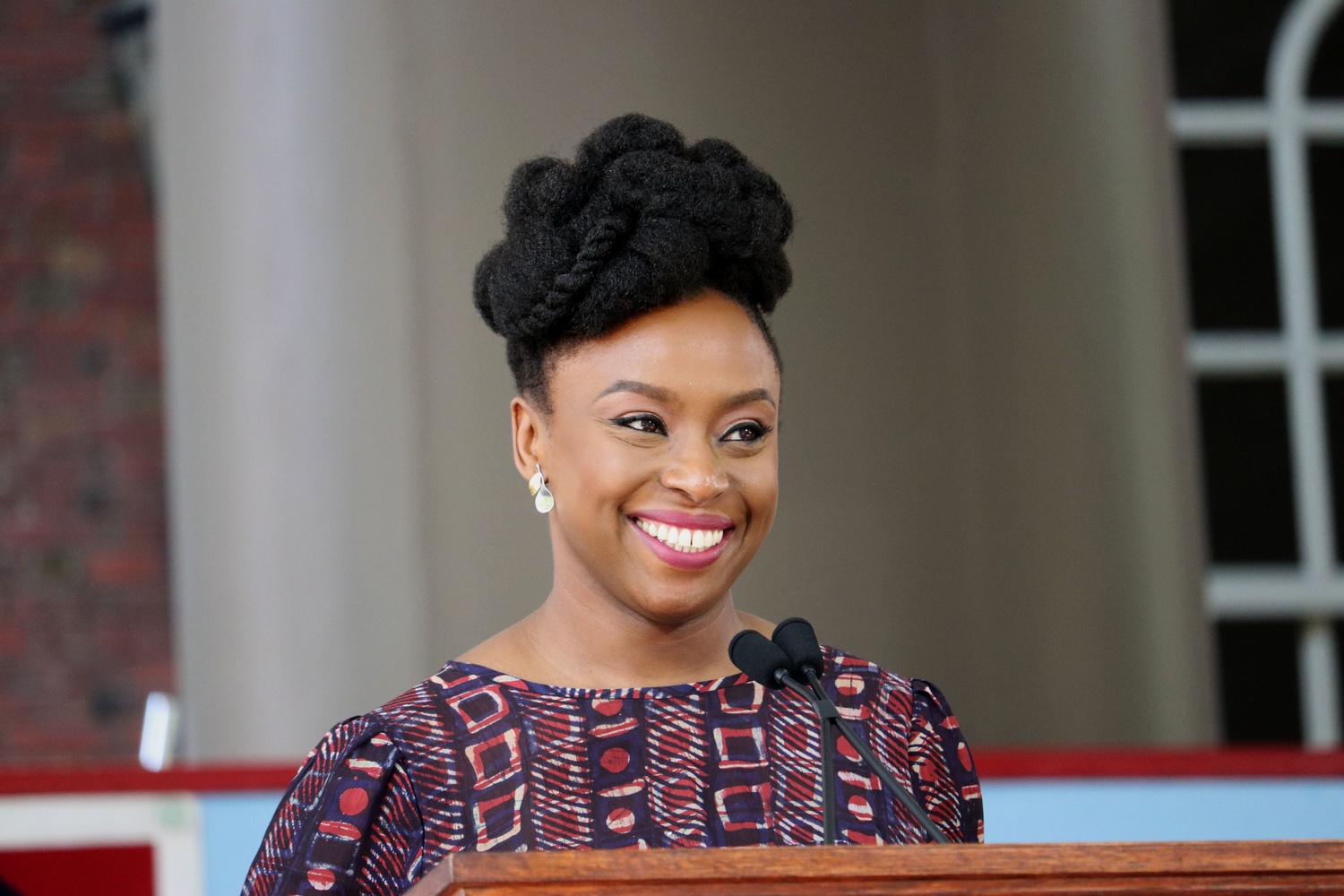
Chimamanda Ngozi Adichie (born 15 September 1977) is a Nigerian writer whose works include novels, short stories and nonfiction. She was described in The Times Literary Supplement as "the most prominent" of a "procession of critically acclaimed young anglophone authors" of Nigerian fiction who are attracting a wider audience, particularly in her second home, the United States. (Wikipedia)

She is a Nigerian author who grew up reading books whose characters were white. She says that this made her think that white people were the norm and black people were different. But when she started reading African books, she began to see herself and her experiences reflected in literature.

Adichie also talks about a poor eight-year-old boy named Fide. She says that the only story he has is his poverty. This is an example of a "single story," which is a story that shows a person or place as only one thing. Single stories can be dangerous because they can lead to stereotypes and discrimination.

Adichie encourages us to read stories from a variety of sources, especially stories from marginalized communities. This will help us to challenge our assumptions and see the world in new ways.

Stories are everywhere. We read them in books, watch them in movies and TV shows, and hear them from our friends and family. Stories are powerful because they can help us to understand ourselves and the world around us.

But not all stories are created equal. Some stories are more complex and nuanced than others. Some stories tell the truth, while others are based on stereotypes and misinformation.

In our post-truth era, it is more important than ever to be critical thinkers and to seek out stories from a variety of sources. We need to be able to identify and challenge single stories, and we need to be willing to stand up for the truth, even when it is unpopular.

The Importance of Stories:

Stories are all around us. We read them in books, watch them in movies and TV shows, and hear them from our friends and family. Stories are an essential part of our lives, and they play a vital role in shaping who we are.

Stories can teach us about the world around us. They can help us to understand different cultures and perspectives, and to learn about the experiences of others. Stories can also challenge our assumptions and beliefs, and help us to see the world in new ways.

In her TED Talk "The Danger of a Single Story," Chimamanda Ngozi Adichie tells the story of her own childhood in Nigeria. She grew up reading books that were mostly written by white authors, and she began to internalize the idea that white people were the norm and that black people were the other. It was only when she started reading books by African authors that she began to see herself and her experiences reflected in literature.

Adichie believes that it is important to read stories from a variety of sources, especially stories from marginalized communities. She says that when we only hear one story about a group of people, it can lead to stereotypes and discrimination. She encourages us to seek out stories that challenge our assumptions and that help us to see the world in new ways.

The Danger of a Single Story:

Adichie defines a single story as "a story that shows a person of a place as only one thing, as only capable of one thing." She says that when we only hear one story about a group of people, it can lead to a number of negative consequences, including:

Stereotypes:

Single stories can lead to stereotypes, which are harmful generalizations about entire groups of people. For example, the single story about Africa might be that it is a continent of war, poverty, and disease. While there are certainly challenges in Africa, there is also much more to the continent than this single story.

Discrimination:

Single stories can lead to discrimination, as people may make assumptions about others based on their race, ethnicity, gender, or other group affiliations. For example, a person who believes the single story about Africa might be less likely to hire someone from Africa or to invest in African businesses.

Invisibility:

Single stories can make it difficult to see and understand the experiences of people who are different from us. For example, the single story about women in the workplace might be that they are not as competent as men or that they are not as ambitious. This single story can make it difficult for women to be seen and respected in the workplace.

Adichie encourages us to challenge single stories and to seek out stories that are more complex and nuanced. She says that we should all be storytellers, and that we should use our voices to tell stories that reflect the diversity of our world.

We should all be feminist:

Chimamanda Ngozi Adichie argues that feminism is for everyone, regardless of gender.

She begins by telling the story of her friend, Okuloma, who died in a plane crash in 2005. Okuloma was a feminist, and Adichie credits him with helping her to understand the importance of feminism.

Adichie then shares her own personal experience of sexism. When she was in elementary school, she was passed over for class monitor despite having the highest marks in her class. The monitor was instead a male student.

Adichie goes on to discuss the global gender gap. Women make up 52% of the world's population, but they hold only 24% of parliamentary seats and 26% of executive positions in business.

Adichie argues that feminism is about more than just gender equality. It is also about challenging traditional gender roles and stereotypes. For example, we teach girls to aspire to marriage, but we don't teach boys the same. We praise girls for their virginity, but we don't praise boys for theirs.

Adichie's definition of feminism is simple: a feminist is anyone who says, "Yes, there is a problem with gender as it is today and we must fix it, we must do better."

The Necessity of Truth in Our Post-Truth Era:

Adichie also believes that it is important to be truthful, especially in our post-truth era. She says that we should not lie, even when it is difficult. She also says that we should be courageous enough to admit when we are wrong.

In her TED Talk "Be Courageous to Speak the Truth," Adichie tells the story of her own experience growing up in Nigeria under a military dictatorship. She says that she saw firsthand the dangers of lies and propaganda. She also says that she learned that it is important to speak out against injustice, even when it is scary.

Adichie believes that truth is essential for democracy and for a just society. She says that we should all be willing to stand up for the truth, even when it is unpopular.

Conclusion:

Stories matter. They can help us to understand ourselves and our world, and they can inspire us to make a difference. But it is important to be critical of the stories we hear and to seek out stories from a variety of sources. Only then can we truly understand the world around us and work to create a more just and equitable future.

Word Count: 1228