Hello readers, Today, I'm thrilled to share insights about the spectacular 31st Inter College Youth Festival 2023 hosted by Maharaja Krishnakumarsinhji Bhavnagar University. Organized by the Department of Physical Education, this edition, titled 'Man Bhavan Yuvak Mahotsav - 2023,' centered around the theme 'Nari Shakti Vandana' and unfolded from the 3rd to the 5th of November.

Let's kick off with the vibrant Kala Yatra, a procession from Shamaldas Arts College to J.K. Sarvaiya Group of College on the 2nd of November. Each college showcased unique themes during the procession, ranging from technology to women empowerment. Our department passionately presented the theme of male dominance and women empowerment.
The Kala Yatra route included stops at Shamaldas Arts College, Central Salt, Aatabhai Chowk, Rupani Circle, Sardarnagar, Swaminarayan Gurukul, and concluded at J.K. Sarvaiya Group of College.


The Youth Festival's inauguration took place at the Amphitheater on the 3rd of November, followed by diverse competitions spanning three stages: Amphitheater (Mukhya Manch), Atal Auditorium (Natya Manch), New Court Hall, External Department, and English Department.
Atal Auditorium:
Theater events, my personal favorite, showcased captivating performances in skits, one-act plays, classical dances, monologues, mime, and mimicry at the Atal Auditorium.
Amphitheater:
Moving to the Amphitheater, folk songs and dances celebrated cultural heritage, while Western group and solo songs added a modern twist.
New Court Hall:
The New Court Hall echoed with the melodious tunes of Sugam Geet and Bhajans, as elocution addressed thought-provoking subjects like artificial intelligence, environmental conservation, and global terrorism.
External Department:
External Department events featured on-the-spot painting, paper collages, clay modeling, cartooning, poster making, rangoli, installations, and photography, each with a unique theme.
English Department:
The English Department hosted poetry and essay writing, newspaper cuttings, and an array of thought-provoking topics.
Let's see the events of Amphitheater:
Folk Song:
Delve into the rich tapestry of folk songs, timeless melodies that echo through generations within a community or culture. These musical gems serve as oral traditions, carrying the essence of experiences, customs, and values unique to their origin. Passed down through the ages, folk songs evolve organically as they weave stories of love, labor, historical events, and the art of storytelling.
Folk Dance:
Embark on a journey into the world of folk dance, where traditional movements and rhythms echo the cultural and social traditions of specific regions or communities. These dances, born from the tapestry of history, rituals, and everyday life, are a living testament to the heritage of the performers. Passed down through generations, folk dances are characterized by distinctive steps, movements, and a symphony of music that encapsulates the spirit of a community.


Western group and solo song :
Western group song in a performance context likely refers to a musical performance where a group of individuals collaboratively sings a song from a Western music genre. Western music encompasses various genres such as rock, pop, country, jazz, and more.


Transitioning from the captivating theses events at the Amphitheater, let's now explore the vibrant offerings at the Atal Auditorium.
Skit:
The theater events commenced with engaging skits, short and humorous plays performed by various colleges. These acts, whether scripted or improvised, aimed to entertain through comedy or satire. As an avid observer, I immersed myself in the diverse themes presented by each college, capturing the essence of this dynamic theatrical experience.


One Act Play:
Enter the world of One Act Plays, where a full-fledged drama unfolds seamlessly in a single act, eschewing intermissions. Diverging from the multi-act structure of longer plays, these succinct performances are crafted to deliver a compelling theatrical narrative in one continuous stretch. Emphasizing specific themes, ideas, or situations, One Act Plays distill a potent and concise theatrical experience, showcasing the creative prowess of the participating colleges. Let's explore the captivating performances that brought this unique storytelling format to life on the stage.


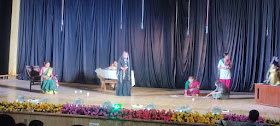

Classical Dance:
Step into the world of Classical Dance, a timeless art form rooted in cultural traditions, boasting a rich history and well-defined techniques. These dances, entrenched in specific cultures, showcase a vocabulary of movements, positions, and gestures, blending precise footwork, expressive hand gestures, intricate facial expressions, and elaborate costumes. From the classical dance spectrum, exemplified by styles like Bharatanatyam and Kathak in India, colleges brought these cultural treasures to life through captivating performances. Witness the grace and beauty that unfolded on the stage through the lens of classical dance.


Mono Act:
Within the theatrical realm, a mono Act takes center stage—a solo performance where a character delivers an uninterrupted speech, baring their innermost thoughts, emotions, or experiences directly to the audience or fellow characters. It serves as a powerful tool, offering a glimpse into a character's psyche, conveying essential plot elements, or providing crucial background information. Monologues, showcased in a myriad of theatrical genres, become a canvas for actors to display their prowess and playwrights to weave intricate layers into the narrative. Witnessing this artistry, Pooja Bhuwa from our department delivered a standout performance in the realm of mono act.


Mime:
Enter the theatrical enchantment of Mime, a captivating performance art where actors narrate stories, embody characters, or express ideas solely through physical movements and gestures, eschewing spoken words. Mime is a dance of exaggerated and expressive body language, coupled with facial expressions, creating a visual symphony that communicates profoundly with the audience. The silent narratives unfolded by all colleges in mime not only delivered exceptional performances but also conveyed poignant messages. Allow me to unveil glimpses of these mesmerizing Mime performances crafted by the talented colleges.


Mimicry:
Dive into the theatrical finesse of Mimicry, a craft where performers adeptly imitate or replicate the mannerisms, voices, and behaviors of others. Within the realm of performance art, actors engage in this skill, mirroring the characteristics of specific individuals, often injecting humor or adopting impersonation. Mimicry extends to replicating accents, speech patterns, physical gestures, and facial expressions to craft an entertaining and recognizable portrayal of the target. Unlike mime, which relies on non-verbal communication, mimicry delves into the art of imitating both vocal and behavioral nuances. Witnessing this artistry, Jay Solanki from our college delivered an exceptional mimicry performance, adding a touch of brilliance to the theatrical canvas.


Let's now catch a glimpse of the enchanting events hosted at the New Court Hall:
Sugam Geet:
Step into the realm of Sugam Sangeet, a facet of Indian music that translates to "easy" or "pleasing" melodies. This genre embodies popular and accessible songs characterized by melodious tunes and straightforward lyrics. Often synonymous with light music, Sugam Sangeet captivates a broad audience with its simplicity, offering a musical journey through themes of love, emotions, and everyday life.
Hardi from our department graced the stage, contributing a performance that resonated with the soul of Sugam Geet.

Bhajan:
Immerse yourself in the sacred melodies of Bhajans, devotional songs that echo with expressions of love and reverence for deities in the Hindu tradition. These hymns form a tapestry of religious music, sung to praise gods, goddesses, and spiritual themes. Whether steeped in tradition or composed in more contemporary tones, Bhajans stand as integral components of religious ceremonies, festivals, and the devotional practices that enrich Hindu culture.
Rinkal Danger from our department graced the stage, delivering a performance that beautifully echoed the spiritual essence of these devotional songs.

Elocution:
Elocution refers to the skill of clear and expressive speech, often with a focus on pronunciation, articulation, and vocal delivery. It is the art of effective and persuasive public speaking or the study of formal speaking in pronunciation, grammar, style, and tone. Elocutionists aim to communicate their message clearly and convincingly, paying attention to aspects such as voice modulation, intonation, and appropriate gestures.
Subjects :
• 'આર્ટિફિશિયલ ઇન્ટેલિજન્સ: કેટલું પડકારજનક?'
• 'યત્ર નર્યાત્સુ પૂજ્યંતે'
• 'ચાલો વૃધ્ધાશ્રમ ઘટાડીએ'
• 'પર્યાવરણ અને માનવ: એક સિક્કાની બે બાજુ'
•'Global Terrorism: Implications and Solutions'
• 'વૈશ્વિક આતંકવાદ: અસરો અને ઉકેલો'
• 'बुलंद भारत की बुलंद तसवीर'
Trushali Dodiya from our department participated in Elocution and gave a wonderful performance.

On the spot painting, Paper collage, Clay modelling, cartooning, poster making, Rangoli, Installation, Photography, these events were held in the External Department.
Poetry writing, Quiz, Essay writing, these competitions were held in the Department of English.


This Youth Festival was not just about competitions; it was a holistic experience of creativity, expression, and celebration. Volunteers played a crucial role, and participants were not only treated to a feast for the senses but also provided with essential amenities.
As the curtains close on this unforgettable event, we extend our gratitude to everyone who contributed to making the 31st Inter College Youth Festival 2023 a resounding success. Until the next celebration, thank you for joining me on this journey through the vibrant tapestry of talent and culture!